Your spring guide for wildlife

Blue tit on icy branches
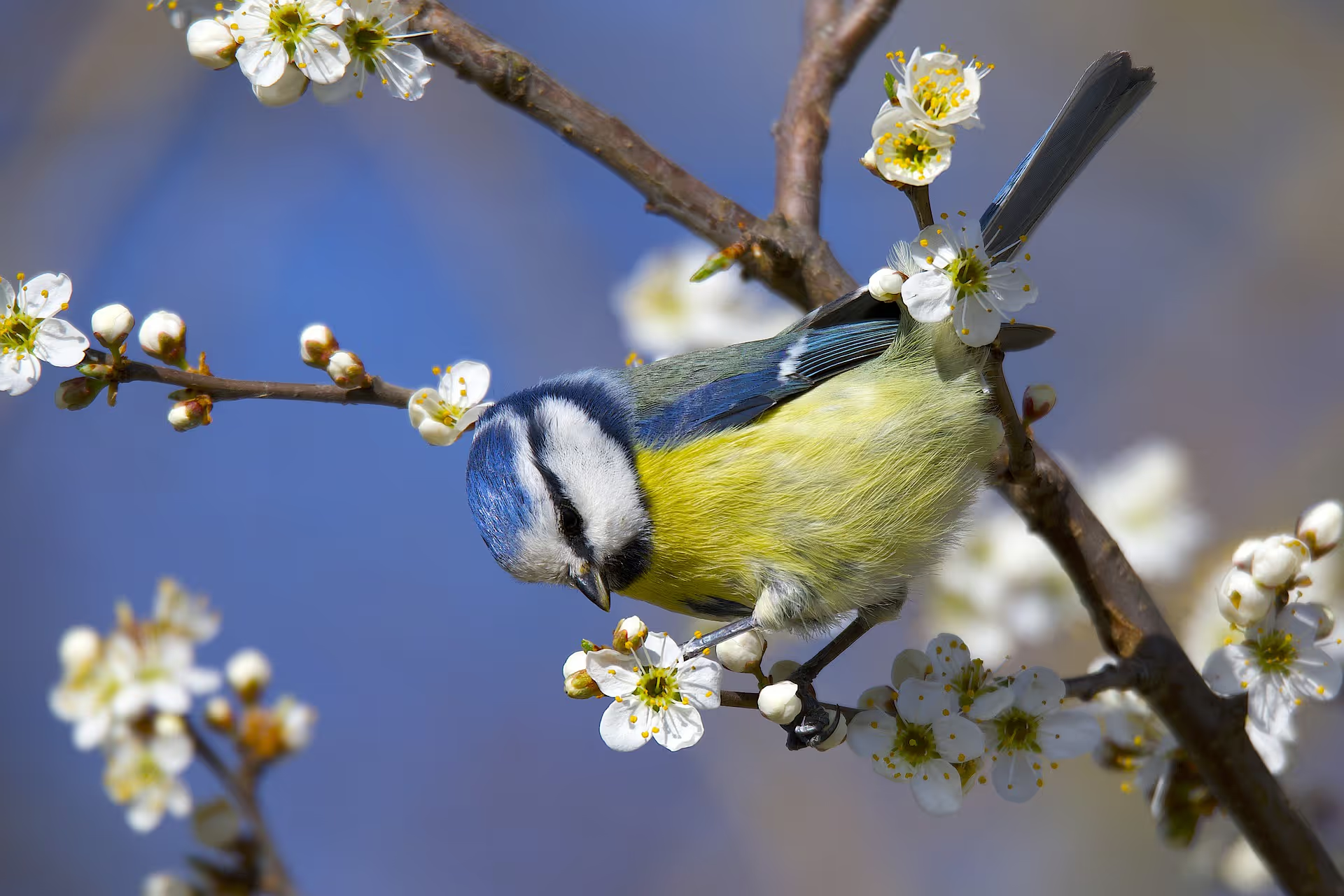
Blue Tit

Spring has finally sprung with the dreary days of winter finally melting away, making way for spots of sunshine, flower buds and the beginning of breeding season.

A helping hand to wildlife can be so appreciated at the beginning of springtime, where many birds are readying for the breeding season by gathering nesting materials and gathering high quality food for their offspring.

Natural food is in good supply, but there are always things we can do to make our green spaces work better for wildlife. You can help by making careful and considered choices about gardening, providing water and limiting your disturbances to wildlife when nesting.

References

Broughton, Richard, Shutt, Jack and Lees, Alexander (2021) Rethinking bird feeding: are we putting extra pressure on some struggling woodland birds? British Birds, 115 (1). pp. 2-6

Hanmer, H. et al., (2022) Habitat-use influences severe disease-mediated population declines in two of the most common garden bird species in Great Britain. Scientific Reports, 12, 15055

Parry, W. and Broughton, R. (2019) Nesting behaviour and breeding success of Willow Tits Poecile montanus in north-west England. Ringing & Migration, 33(2), pp. 75-85

Plummer, K. et al., (2019) The composition of British bird communities is associated with long-term garden bird feeding. Nature Communications, 10, 2088

Šálek, M. et al., (2024) Urban refuges in winter: the role of habitat characteristics and supplementary feeding in shaping bird occupancy and abundance. Urban Ecosystems, 28(67)

Sauer, E. (2024) Citizen science observations shed light on how anthropogenic food sources influence wildlife disease. Journal of Animal Ecology, 93(12), pp. 1841-1844

Shutt, J. and Lees, A. (2021) Killing with kindness: Does widespread generalised provisioning of wildlife help or hinder biodiversity conservation efforts? Biological Conservation, 261, 109295

Siriwardena, G. (2010) Possible roles of habitat, competition and avian nest predation in the decline of the Willow Tit Parus montanus in Britain. Bird Study, 51(3), pp. 193-202

Tassin de Montaigu, C. and Goulson, D. (2023) Habitat quality, urbanisation & pesticides influence bird abundance and richness in gardens. Science of The Total Environment, 870

Teemer, S. et al., (2024) Colder temperatures augment viability of an indirectly transmitted songbird pathogen on bird feeders. Ecosphere, 15(12), 70139

BACK TO seasonal adviceBACK TO How can I help Songbirds?