.png)
NEW RESEARCH PAPER PUBLISHED

April 21, 2026

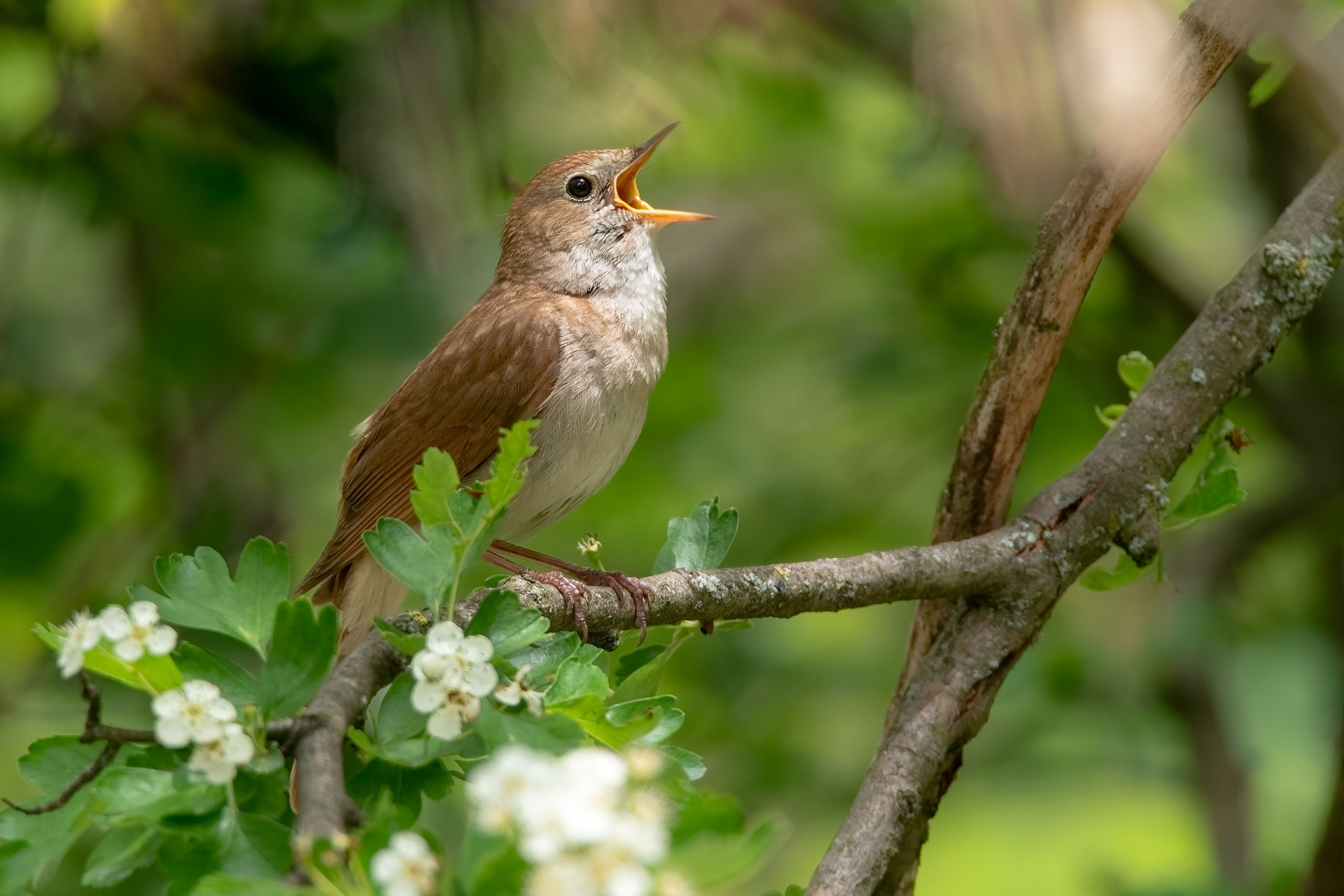
The first Sunday in May is International Dawn Chorus Day. It’s a simple idea: set aside a little time to listen to one of nature’s most remarkable daily events. At times, it may be hard to love the sounds of birds singing outside your window at 4am in the morning, but the cacophony of chirps and tweets meld together into a complex song that is a cherished part of our natural heritage.
As the days grow warmer and longer, our feathered friends grow noisier - but did you know that their song can have a number of purposes including recognition, attracting a mate or defending a breeding territory.

Songbirds will start singing at different times, with the best time to listen around half an hour before and after sunrise. The song thrush is often first, followed by blackbirds, wrens and robins, who will start to sing well before the sun rises. At this time of day, sound travels much further than when there is more background noise and there is often less wind. This enables the birds to hit the mark with their quest for territory or attracting a mate. It’s also too early to gather food in the dim light, so a perfect use of time!

If you stop and listen, you'll start to notice that each species has at least one signature song but some have a repertoire of five tunes or more. Incredibly the nightingale has a repertoire of more than 200 melodies. The songs have to be learned and it is a vital lesson, as those which sing the wrong tune, may have less success finding a mate. Similar to how children make their first ventures into speech, young birds listen to their elders and test out short bursts of song. If it doesn’t sound quite right, they will adapt and try again. For some species it is critical to learn the song at only a few months old but for others, new songs are learned throughout their life.

How do birds sing?
The unique nature of birdsong is due to an organ called the syrinx buried deep in the chest cavity, just above where the larynx splits into the two windpipes which connect each lung. The syrinx, was named in 1872 after a Greek nymph who was transformed into panpipes, as it has a similar structure. Uniquely, the syrinx enables two unrelated pitches to be created at once, which means those beautiful complex songs are possible.
Many UK organisations and local groups run dawn chorus walks each spring, especially around International Dawn Chorus Day. A quick search should help you find something happening in your area. Whether you’re on a guided walk or simply stepping outside with a cup of tea, there are plenty of ways to identify the birds you hear:
Although songbird numbers have significantly declined in the last 50 years, the dawn chorus is still a wonder of nature and well worth the early alarm.
We need your help to fund our crucial independent research and work.
Join our community and receive our exclusive membership benefits.
Receive our monthly e-news and regular updates



.avif)