

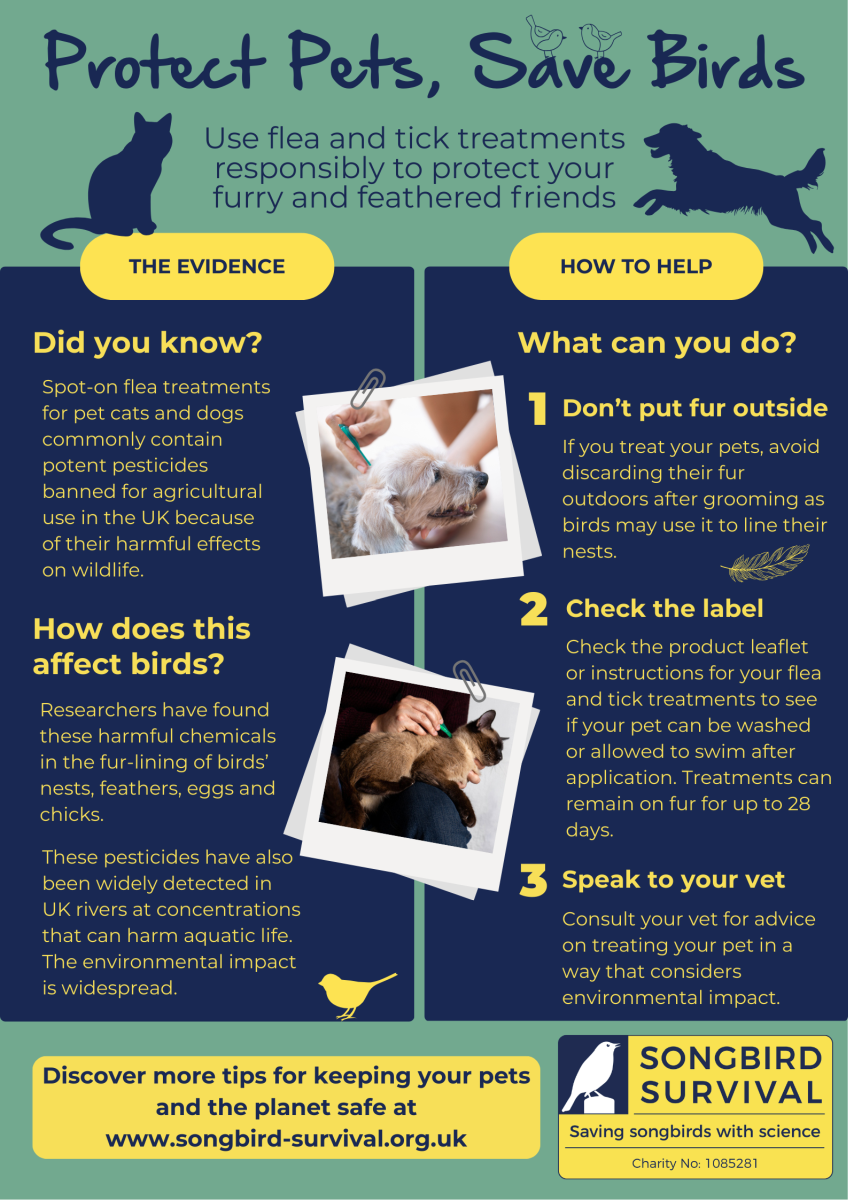
Did you know that most spot-on flea and tick treatments for pet dogs and cats contain fipronil and imidacloprid, pesticides banned for agricultural use in the UK and the EU because of their harmful effects on wildlife?
The impacts of these chemicals in the environment are widespread. Fipronil has been found in every UK river tested and imidacloprid in 70% of rivers, both at concentrations which can harm aquatic life. Terrestrial species are also at risk; just a teaspoon of imidacloprid is enough to kill 1.25 billion honeybees.
Research has found that these chemicals enter waterways both directly from dogs swimming in rivers and ponds, and indirectly via household drains when pet owners wash their hands, bathe their pets, or wash pet bedding.
In January 2025, research by the University of Sussex, funded by SongBird Survival, found high levels of pesticides in blue tit and great tit nests lined with animal fur. 100% of nests contained fipronil, which was banned in the EU for agricultural use in 2013, and 89% contained imidacloprid, which was banned in the EU as a plant protection product in 2018.
The research found that blue tits and great tits are routinely exposed to pesticides in their nests and that higher pesticide concentrations were associated with increased chick mortality, including more unhatched eggs and dead chicks. With pet flea and tick treatments confirmed as the most likely source of contamination, the study raised serious concerns about the impacts of veterinary medicines on songbirds.
We have funded further research by the University of Sussex intowhether these pesticides are being transferred from birds’ nest linings totheir eggs and chicks. The latest results will be published soon.
Dr. Cannelle Tassin de Montaigu, Research and Associate Fellow at the University of Sussex and lead author of the research paper says:
“No nest was free from pesticides in our study, and this significant presence of harmful chemicals could be having devastating consequences on the UK’s bird populations.”
“Our research shows that based on the chemicals detected, veterinary flea and tick drugs are the most likely source of contamination. We undertook our research when it was safe to do so at the end of the breeding season, so the problem could in fact be much worse. This raises questions about the environmental impact of veterinary drugs and calls for a comprehensive environmental risk assessment of veterinary treatments.”
Keeping your cats and dogs safe from fleas and ticks is important for the health of both your pets and your household.
Current advice from the British VeterinaryAssociation (BVA) to vets is to avoid blanket treatment of flea and tick treatments, and instead risk assess what your pet needs. The BVA also recommends where possible and reasonable for vets to avoid prescribing topical products for pets which are likely to swim or be bathed.
Receive our monthly e-news and regular updates
We need your help to fund our crucial independent research and work.
Join our community and receive our exclusive membership benefits.



.avif)