
Alert Status:
Green
Population change:
124% increase (1995-2024)
130,000 breeding pairs
Listen to the great spotted woodpecker's song
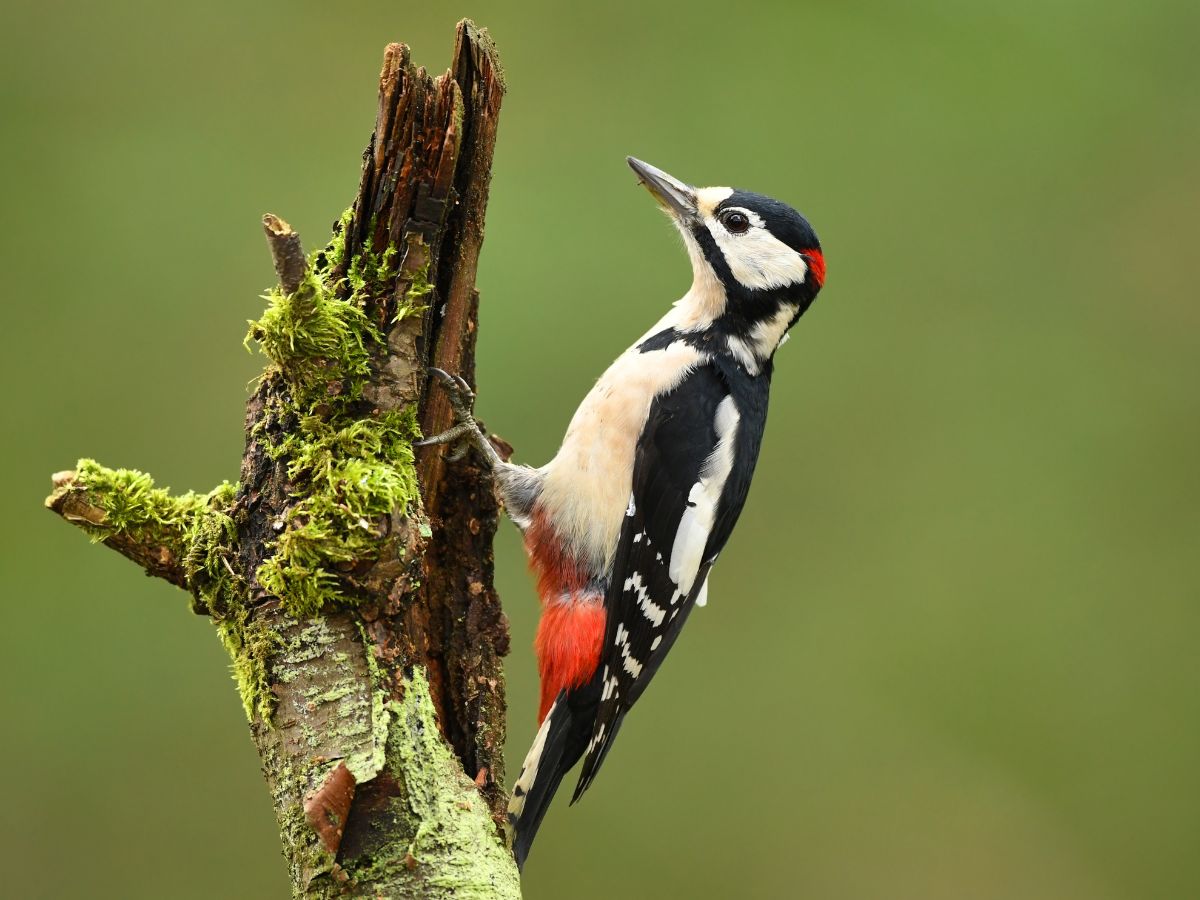
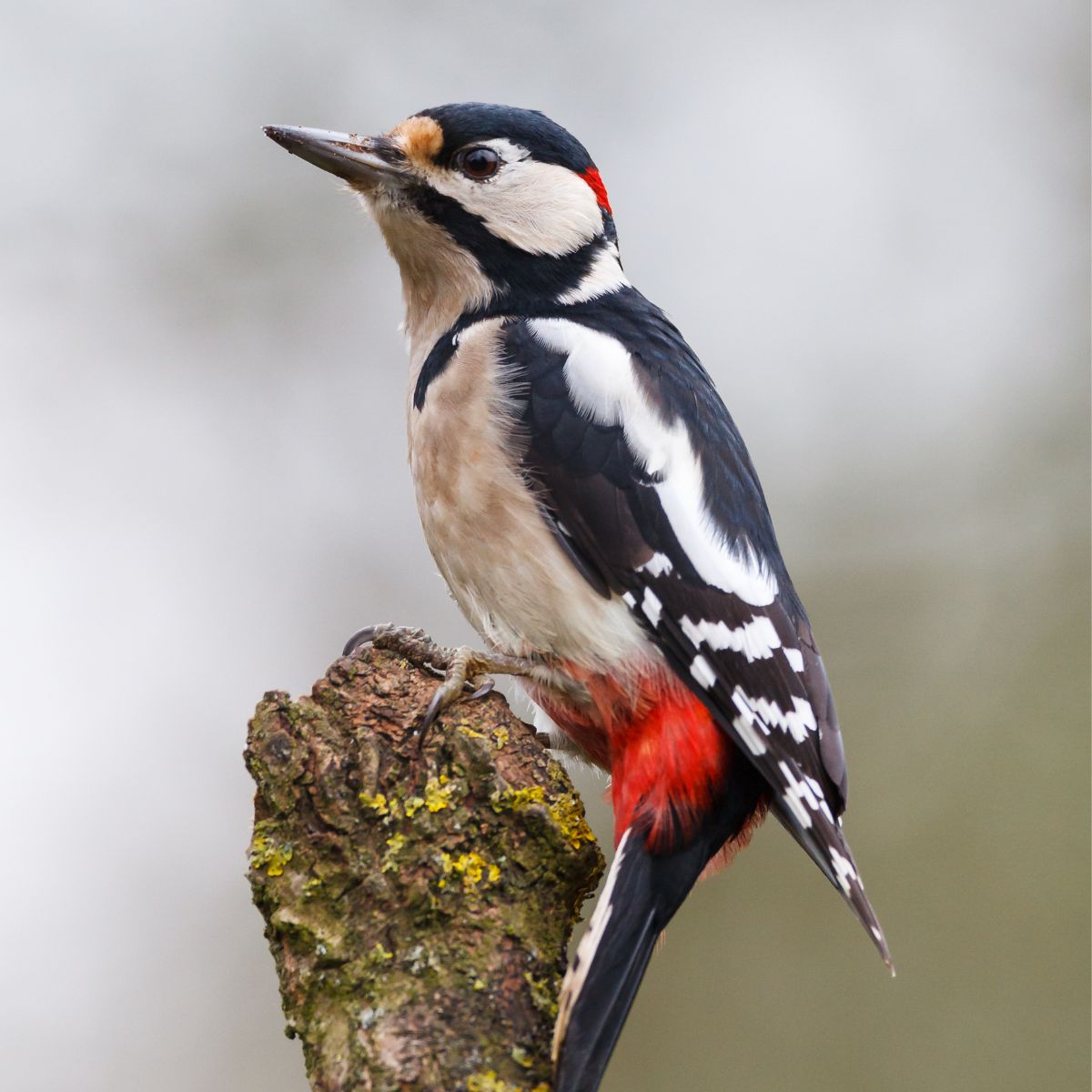
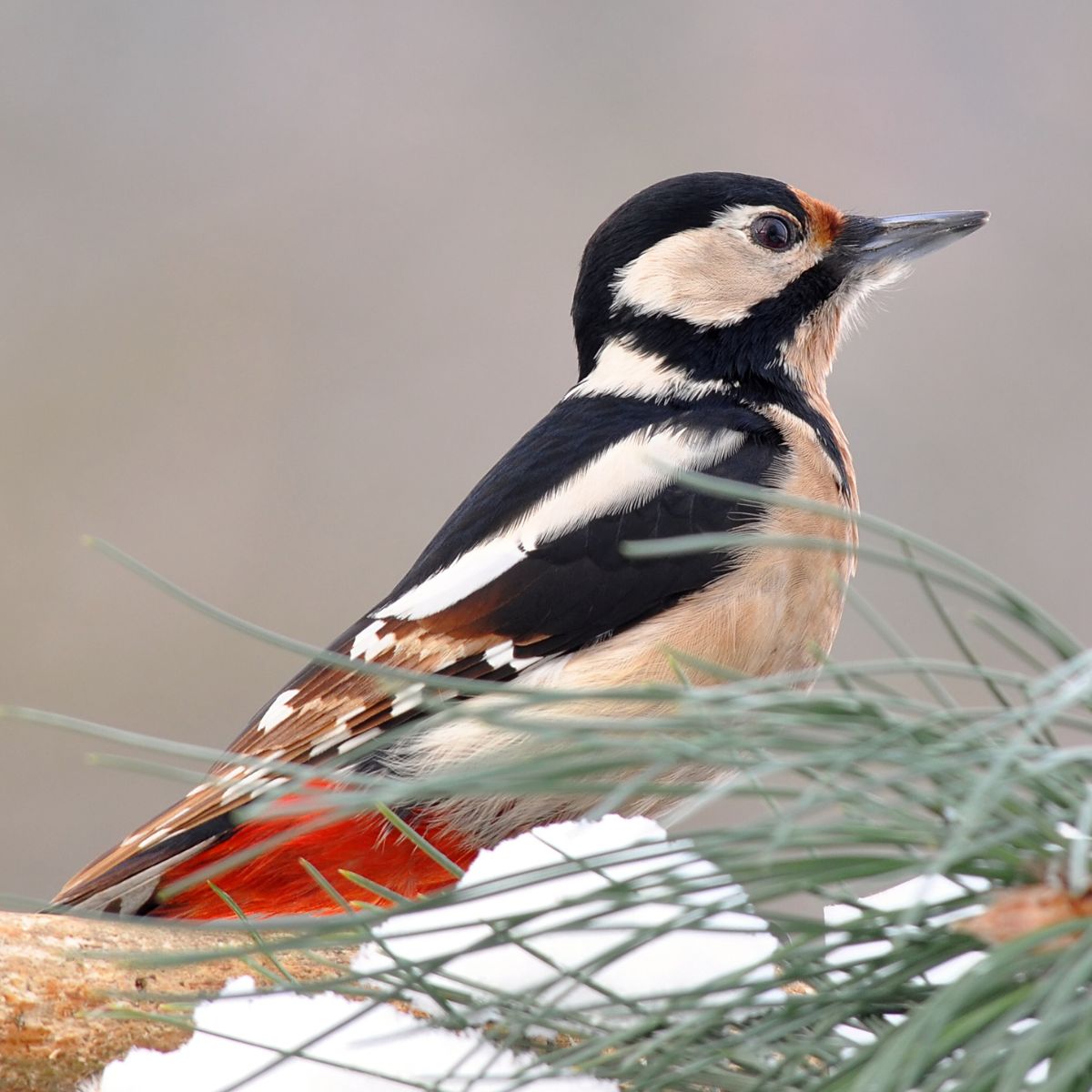
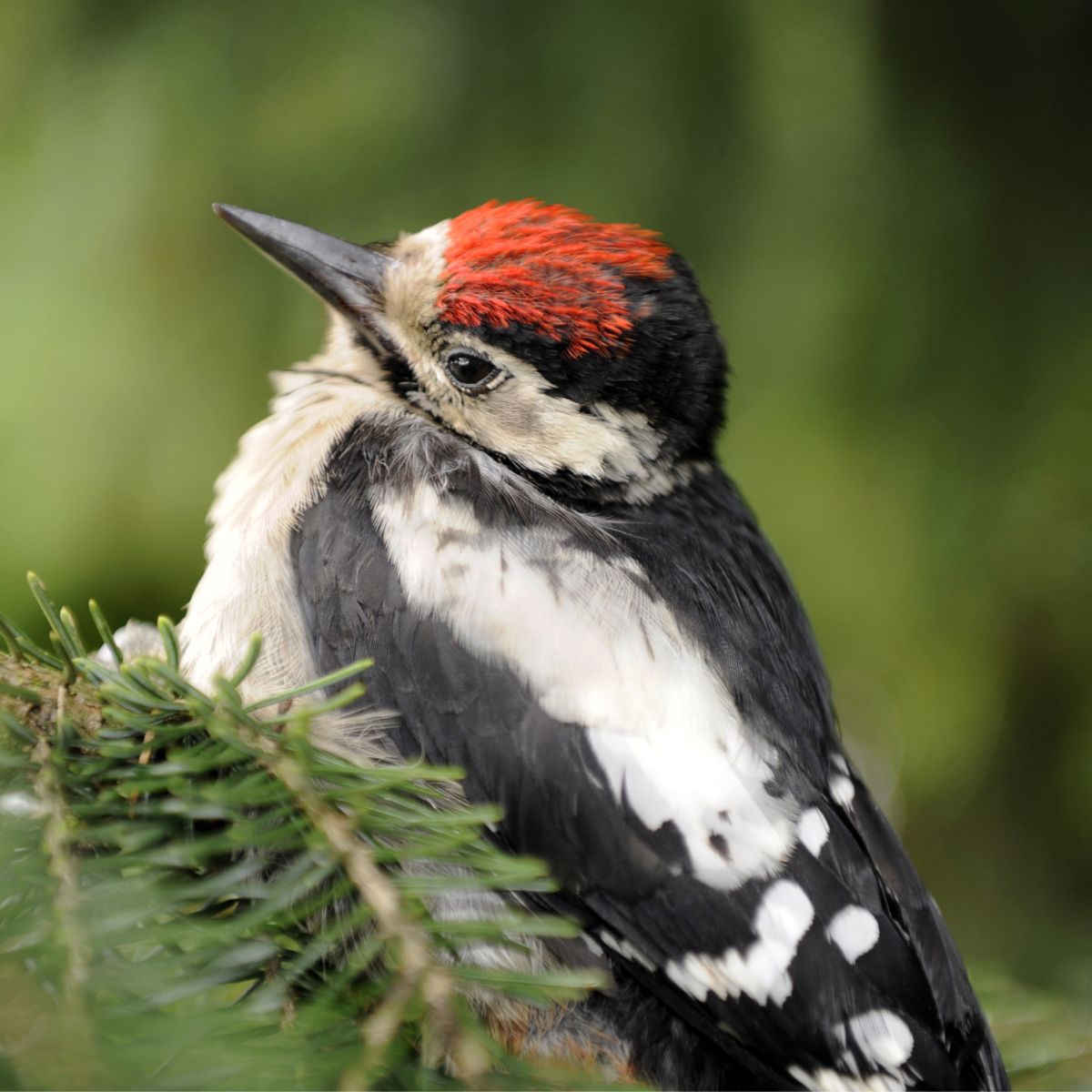
Similar in size to a blackbird, both male and female great spotted woodpeckers are striking birds, sporting black and white plumage and a vivid red rump. Their wings are tipped with white spots, and they feature a black cap and white cheeks. Males are distinguished by a red patch on the back of their heads, while juveniles display an all-over red crown. In addition to their bold appearance, these woodpeckers are easily recognised by their distinctive drumming and sharp, repeated calls.
Average Length: 21-23cm
Average Lifespan: 2 years
Average Wingspan: 26cm
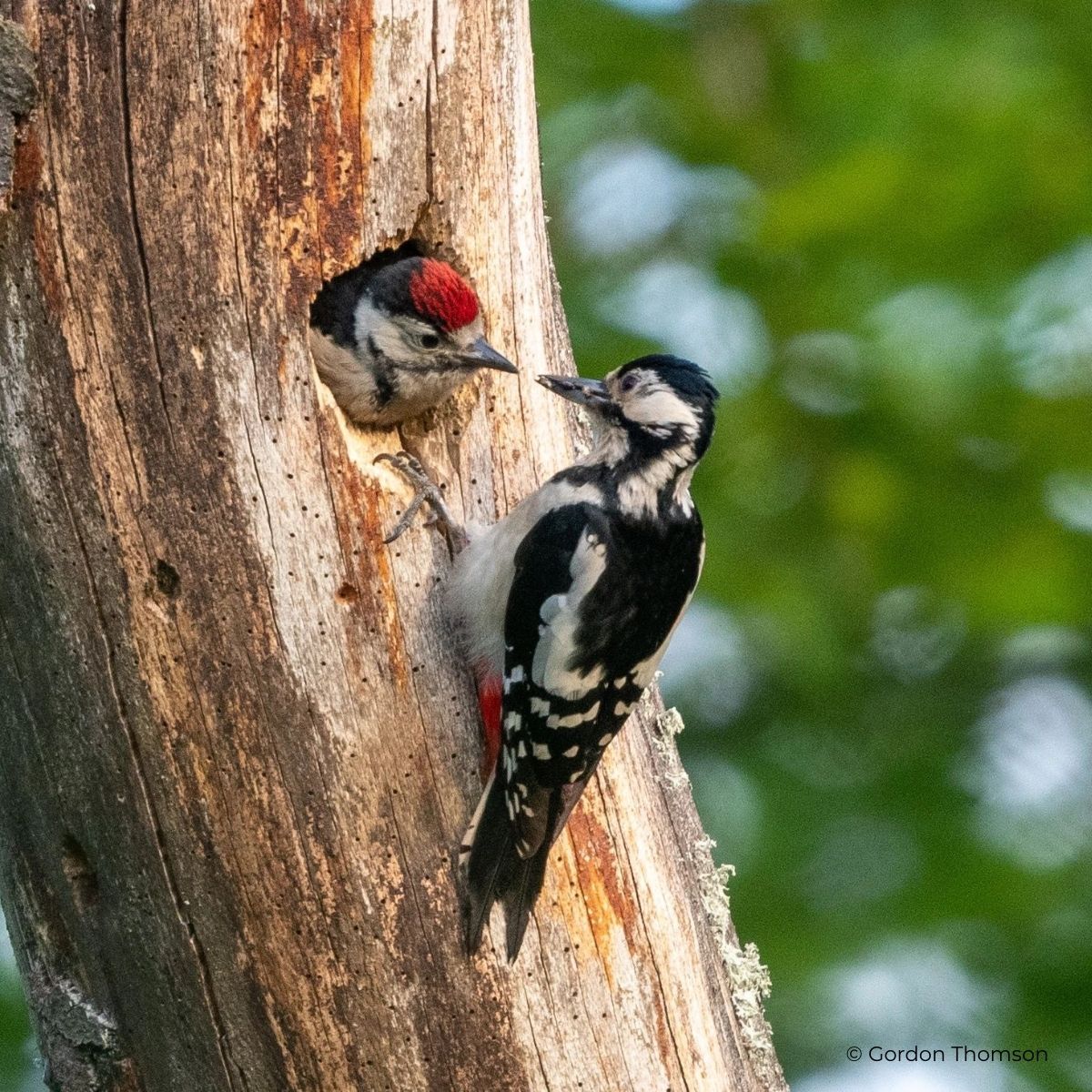
Their diet consists mainly of insects and larvae, which they excavate from beneath tree bark using their strong beaks and extract with their long, sticky tongues. During winter, they switch to berries and nuts and readily visit garden feeders with a preference for peanuts. They will predate eggs and chicks of other birds during the spring, especially cavity nesters such as the willow tit whose nests they can open up using their beaks.
Males and females use their beaks to excavate a nesting cavity in a tree trunk or large branch, usually an oak or birch tree. Around March-April, females lay 4-6 eggs which both parents incubate for 11-13 days. The chicks are fed by their parents for just over 3 weeks before fledging. Males and females are usually monogamous across one or more breeding seasons.
The population of great spotted woodpeckers has increased drastically across the UK, thought to have been influenced by greater availability of supplementary bird food and an increase in standing dead wood due to Dutch elm disease.
Threats include the fragmentation and loss of nesting and feeding habitat, as well as predation from larger birds such as the goshawk or sparrowhawk.
The great spotted woodpecker’s tongue is so long that it wraps around the back of the skull when not in use!
BTO (2025) BirdFacts Species: profiles of birds occurring in the United Kingdom. Available at: https://www.bto.org/learn/about-birds/birdfacts/great-spotted-woodpecker
Holden, P. and Gregory, R. (2021) RSPB Handbook of British Birds. London, UK: Bloomsbury Publishing Plc.
Ónodi, G. and Csörgő, T. (2014) Habitat preference of Great-spotted Woodpecker (Dendrocopos major Linnaeus, 1758) and Lesser-spotted Woodpecker (Dendrocopos minor Linnaeus, 1758) in the presence of invasive plant species – preliminary study. Ornis Hungarica, 22(2), pp. 50-64
Stański, T., Stańska, M. and Czeszczewik, D. (2025) Foraging behavior of the Great Spotted Woodpecker (Dendrocopos major) and the Middle Spotted Woodpecker (Dendrocoptes medius) during breeding season in the Białowieża National Park, Poland. Journal of Ornithology, doi: 0.1007/s10336-025-02327-8
Woodland Trust (2025) Great spotted woodpecker (Dendrocopos major). Available at: https://www.woodlandtrust.org.uk/trees-woods-and-wildlife/animals/birds/great-spotted-woodpecker/



.avif)